Confused Between Docker and Kubernetes? Read This First

VikizCode Team
April 14, 2026 · 8 min read
✨ AI-Generated Summary
Students often get confused between Docker and Kubernetes. Learn why you must master Docker basics before even touching Kubernetes to avoid overwhelming yourself.
“If you’ve started exploring real-world development, you’ve probably heard Docker and Kubernetes everywhere.”
Which one should you learn first? Do you need both? Most students approach this in the wrong order, leading to massive confusion and eventual burnout. Let's clear the air and set the right path for you.
What is Docker? (The Portable Box)
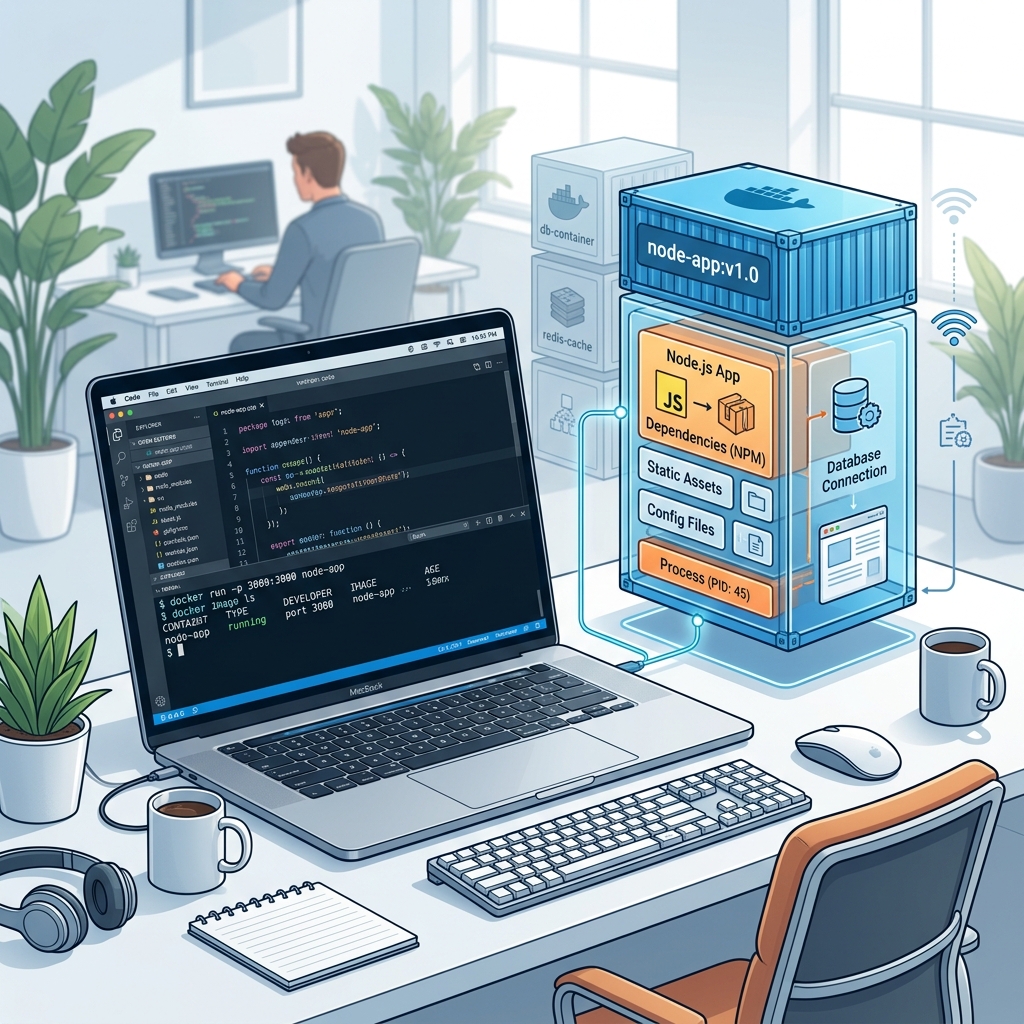
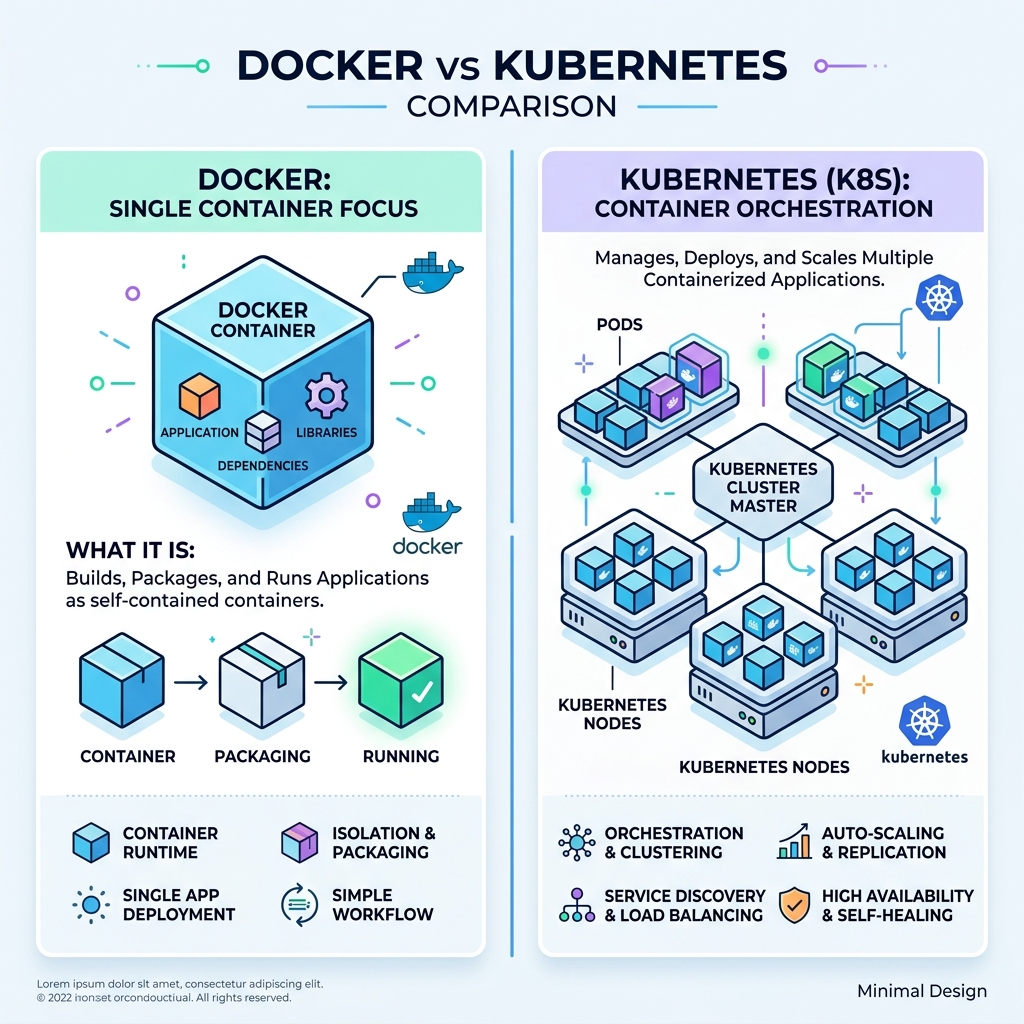
Think of Docker as a way to package your app with everything it needs to run anywhere. In the old days, you’d build an app on your laptop, and it wouldn’t work on your friend’s laptop because of "missing dependencies" or "wrong versions."
The Analogy: Docker is like a portable box for your project. You put your code, the libraries, and the settings inside. Once the box is closed (the container), it will run exactly the same way on any machine that has Docker installed.
It's simple, practical, and it solves the most common developer headache: "It works on my machine!"
Why Docker is Perfect for Beginners
If you're just starting out, Docker is your best friend. Here’s why:
- Easy to Try: You can install Docker Desktop and run your first container in minutes.
- Instant Results: You see your app running in a clean environment immediately.
- Useful for Real Projects: Even small college projects benefit from being "containerized."
- Builds Confidence: Mastering Docker makes you feel like a real engineer who understands how software is distributed.
What is Kubernetes? (The Kitchen Manager)
If Docker is a container, Kubernetes (often called K8s) is the system used to manage hundreds or thousands of those containers at scale. When your app grows from 10 users to 10 million, you can't manually manage each container.
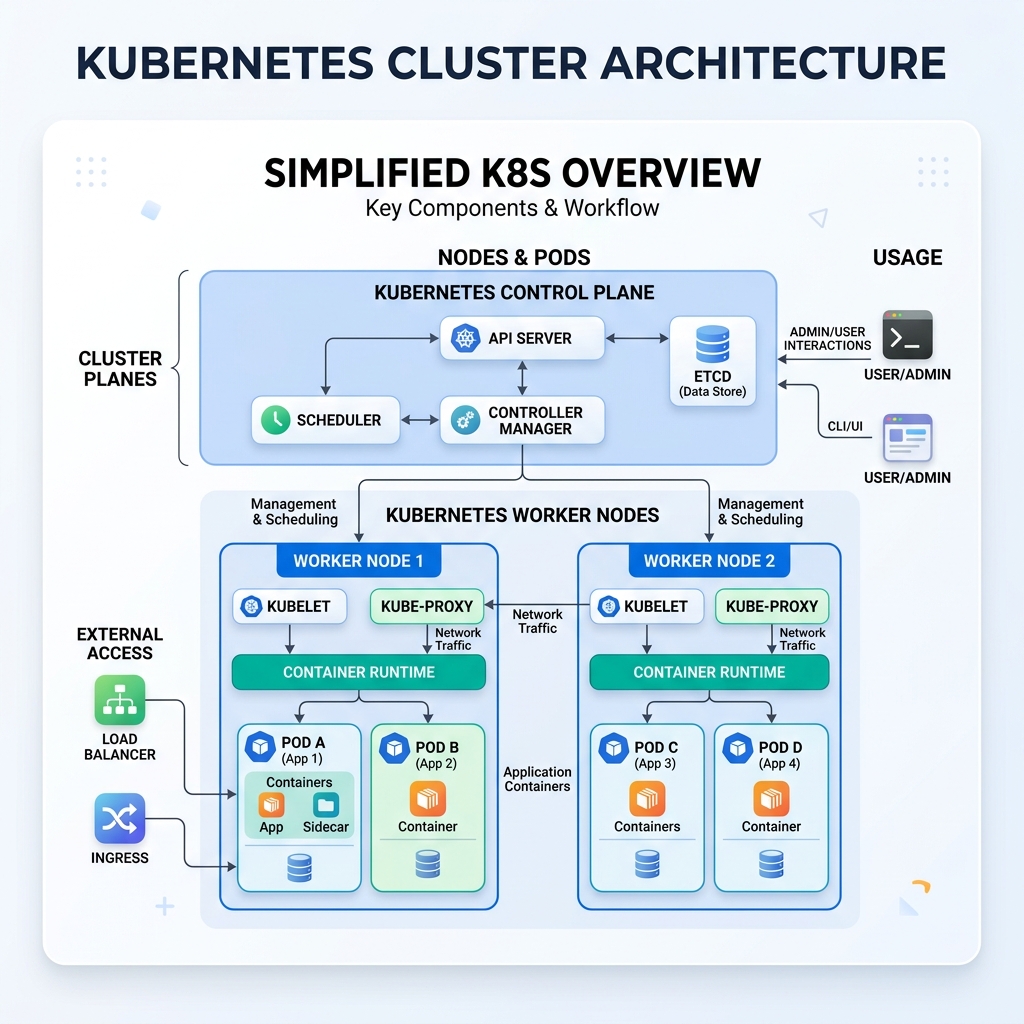
Kubernetes automates everything: it restarts containers that crash, scales them up when traffic hits, and makes sure your app stays online even if a server fails. It's powerful, but it's built for scale, not for solo dev learning.
Why Kubernetes Feels Confusing at First
Most students dive into Kubernetes too early and hit a wall. Here’s why it’s overwhelming:
- Too Many New Terms: Pods, Nodes, Clusters, Ingress, ConfigMaps—it’s like learning a new language.
- No Quick Wins: It takes a lot of configuration just to get a simple "Hello World" running.
- Requires Docker Knowledge: You can't manage containers if you don't know how to build them first.
- Abstract Concepts: It’s hard to visualize what a "distributed system" is when you’re just trying to run a simple Node.js app.
The Right Learning Order: The Core Insight
This is the most important part of this guide. Stop trying to learn everything at once. Follow this path instead:
Your Roadmap to Mastery
Learn Docker Basics (Images & Containers)
Use Docker in a Small Personal Project
Then (and only then) explore Kubernetes
Jumping directly to Kubernetes without understanding Docker is like trying to manage a restaurant without knowing how to cook a single dish. You’ll be lost in the complexity without any foundation.
A Memorable Analogy
To keep it simple, remember this:
"Docker is like cooking one perfect dish."
"Kubernetes is like managing an entire restaurant kitchen."
You need to be a good cook before you can be a great manager.
What You Should Do Today
Instead of watching another 40-minute "Intro to Kubernetes" video, do this instead:
- Install Docker Desktop: It's the standard for dev machines.
- Run your first container: Try
docker run hello-world. - Understand basic commands: Learn
build,run,stop, andps. - Don’t touch Kubernetes yet: Close those tabs and focus on containerizing your current project.
Conclusion
The tech world moves fast, and the pressure to learn everything is real. But the most successful engineers are those who master the fundamentals first. You don’t need to learn every tool on Day 1.
Start with Docker. Build something. Move to Kubernetes when you actually need to scale.
Master the container today. Manage the cluster tomorrow.
Stay Updated with VikizCode 🚀
Join us to get fresh web dev guides, AI tools, and deployment tips directly in your inbox.
NO SPAM. JUST PURE GEEKY GOODNESS.